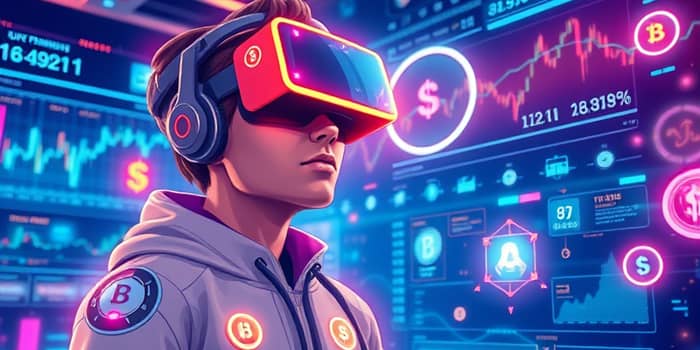
The metaverse represents a transformative shift in how we interact with digital worlds. An interconnected virtual universe in 3D is now redefining finance, offering unprecedented possibilities for innovation and engagement.
Users access this space via avatars and devices like VR headsets. This immersive ecosystem integrates blockchain and AI to create dynamic economic environments.
Gartner predicts that by 2026, 25% of people will spend at least an hour daily in the metaverse. This growth fuels a virtual economy driven by digital currencies and real-time transactions.
At its core, the financial metaverse is a blend of virtual reality and decentralized technologies.
It allows for seamless interactions in banking and investment through avatars.
Technologies like cryptocurrencies and NFTs are fundamental to this new landscape.
They enable secure and transparent financial activities within virtual spaces.
Financial institutions can leverage the metaverse to enhance customer experiences.
Virtual branches and personalized attention offer real-time advice through AI-driven avatars.
This improves client relationships without losing the human touch.
These opportunities attract younger generations like Gen Z and millennials.
They seek interactive events and gamified loyalty programs in immersive settings.
Enhanced social networks allow for virtual investor meetings and targeted advertising.
Future transactions may include AR/VR channels for payments and mortgages.
Many banks have already established a presence in the metaverse.
They use this technology to innovate and reach new customer segments.
These examples highlight the diverse applications across industries.
They demonstrate a commitment to exploring new digital frontiers.
The financial metaverse opens up novel ways to invest and grow wealth.
Funds and ETFs dedicated to metaverse themes provide accessible entry points.
Primary beneficiaries include VR/AR creators and service providers.
Economic growth opportunities are estimated in the billions of dollars.
Cryptocurrencies and NFTs serve as exchange assets for virtual goods like houses and clothing.
Fintech companies often lead in innovation compared to traditional banks.
Several technologies are crucial for the development of the financial metaverse.
They work together to create seamless and secure experiences.
These technologies have evolved rapidly since their inception.
They continue to shape the future of digital finance.
Despite its potential, the financial metaverse faces significant hurdles.
The technology is still in its early stages and requires maturation.
Meta's investment of over $70 billion highlights the high stakes involved.
Defining the ecosystem and resolving jurisdictional issues are ongoing tasks.
These risks must be managed to ensure sustainable growth.
The financial metaverse holds immense promise for transforming how we manage money.
It offers immersive opportunities that blend technology with human interaction.
By 2030, nearly half of banking transactions could involve AR/VR channels.
Embracing this change requires innovation and adaptation from all stakeholders.
Institutions that invest in these technologies today may lead tomorrow's economy.
The journey ahead involves navigating risks while seizing new possibilities.
Ultimately, the metaverse could redefine financial literacy and inclusion globally.
Referencias